
Trigger Stacking: Why Good Dogs Have Bad Days
Trigger Stacking: When Little Things Add Up
Imagine your dog, Fido. He's friendly, enjoys going places with his family, and usually loves meeting new people. One afternoon, however, he surprises everyone by biting a stranger who reaches down to pet him.
What happened?
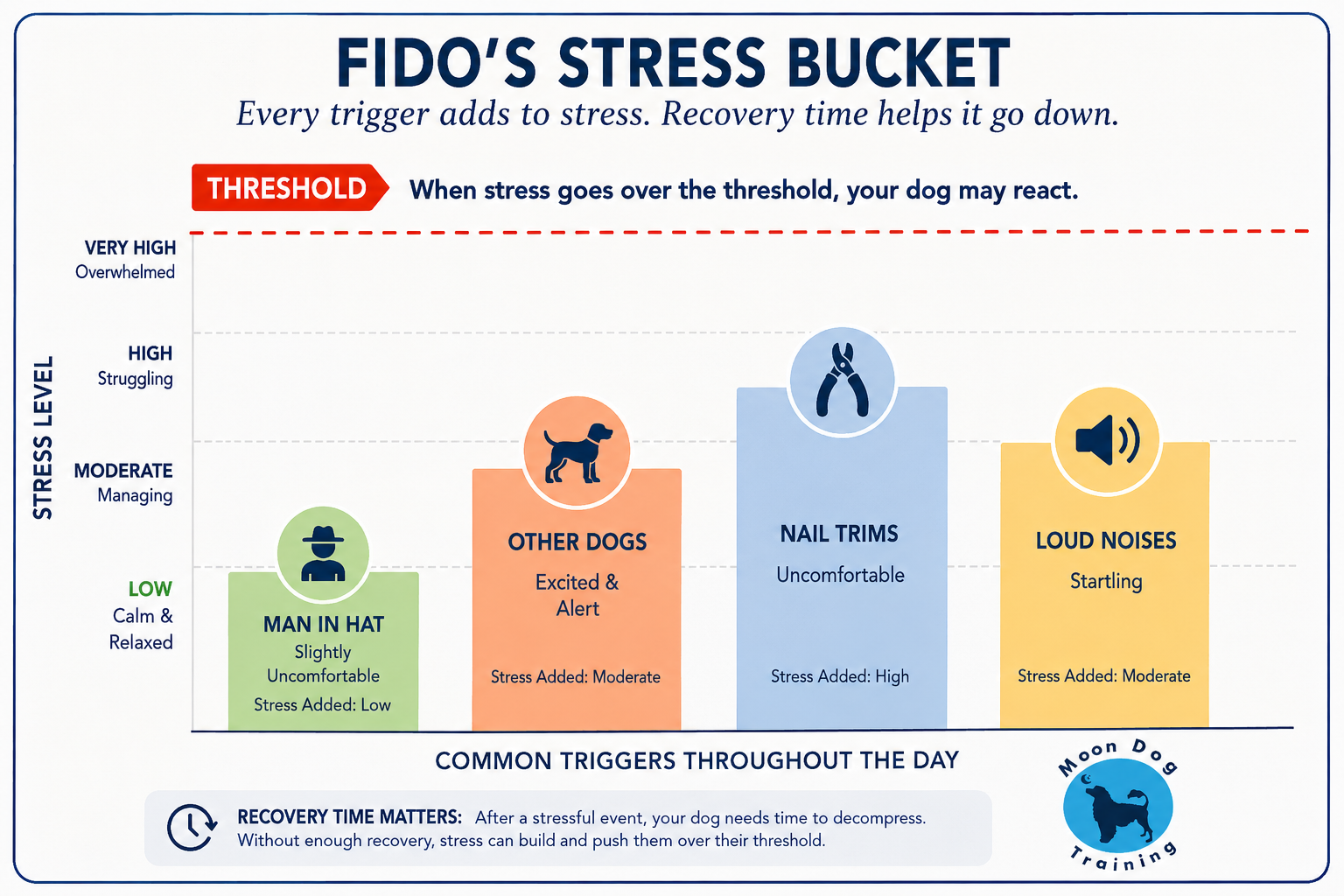
Most bites don't happen because a dog suddenly "snaps." More often, they're the result of stress building over time until the dog simply can't cope anymore. This is known as trigger stacking.
Every dog has a limit to how much stress, excitement, frustration, or discomfort they can handle before their ability to make good decisions begins to decline. As stress builds, their emotional "bucket" fills. If it becomes too full, even something that normally wouldn't bother them can push them over the edge.
What Counts as a Trigger?
A trigger is anything that changes your dog's emotional state. Triggers aren't always scary or negative - they're simply events that require your dog to process information or respond.
Common triggers include:
🔹 Loud noises or thunderstorms
🔹 Veterinary or grooming appointments
🔹 Seeing unfamiliar dogs
🔹 Being approached by strangers
🔹 People wearing hats, sunglasses, or carrying umbrellas
🔹 Busy environments
🔹 Car rides
🔹 Lack of sleep or rest
🔹 Pain or illness
🔹 Exciting activities like daycare, visitors, or playing fetch
Some dogs recover from these experiences quickly. Others need much longer before their stress levels return to normal.
Stress Doesn't Disappear Immediately
One of the biggest misconceptions is that stress ends when the event is over. It doesn't.
After something stressful or highly arousing happens, your dog's body releases hormones such as adrenaline and cortisol. While adrenaline fades relatively quickly, cortisol can remain elevated for many hours - and sometimes up to 24 to 72 hours after a significant stressful event.
That means your dog may still be carrying the effects of yesterday's stressful experience even though they appear perfectly fine today. This is why recovery time is so important.
An Example of Trigger Stacking
Let's go back to Fido.
His day begins with a trip to the groomer for a nail trim. While he tolerates it, it's stressful.
Afterward, his owners decide to reward him with a walk through the park.
During the walk:
He passes several unfamiliar dogs.
One dog barks at him.
A thunderstorm begins rolling in.
As they're heading back to the car, a friendly stranger wearing a hat bends down to pet him.
That's when Fido bites.
Did the man wearing the hat cause the bite?
Not by himself.
The grooming appointment, unfamiliar dogs, barking, storm, and stranger all added to Fido's stress. By the time the final interaction occurred, his emotional bucket was already overflowing. The stranger simply happened to be the last trigger, not necessarily the biggest one.
Why Dogs Don't Always Warn Us
Many owners say, "He's never done that before."
Or, "It came out of nowhere."
In reality, dogs almost always communicate before biting - but their signals are often subtle and easy to miss.
They may:
Turn their head away
Freeze
Lip lick
Yawn
Hold their breath
Close their mouth
Pin their ears back
Lower or stiffen their tail
Avoid eye contact
Walk away
When those signals don't create more distance, the dog may feel they have no other option but to escalate.
A bite is almost always communication that happened too late for us to recognize, not a sign that the dog wanted to bite.
How to Prevent Trigger Stacking
You can't eliminate every trigger from your dog's life, but you can help prevent stress from building faster than your dog can recover.
Try to:
✔ Give your dog quiet time after stressful events.
✔ Avoid scheduling multiple challenging activities on the same day.
✔ Watch for subtle body language that suggests your dog is becoming uncomfortable.
✔ Respect your dog's need for distance instead of encouraging unwanted interactions.
✔ Remember that pain, illness, lack of sleep, and aging often lower a dog's tolerance.
Sometimes the kindest thing you can do is simply let your dog decompress.
The Takeaway
When a dog reacts, it's rarely because of one thing.
More often, it's the accumulation of many small stressors that eventually exceed the dog's ability to cope.
By recognizing your dog's triggers, allowing plenty of recovery time, and learning to read their body language, you can often prevent problems before they happen.
Progress isn't about teaching a dog to tolerate more and more stress - it's about helping them feel safe enough that they don't need to react in the first place.At Moon Dog Training's Reactive Rovers classes, we help dogs learn these replacement skills through carefully planned exercises that keep them under threshold while gradually building confidence around their triggers. Because every dog learns at a different pace, we focus on setting each team up for success rather than rushing progress.